
Vector · The guide
Introduction
Vector measures action-aware in-context adaptation: a policy is shown one robot demonstration of a task and must do it in a scene it has never seen, with its weights frozen.
2 min read
What Vector measures
A policy is shown an expert do a task once, in one scene. It then has to do the same task on its own, in a second scene where the objects have moved and the other arm may have to act. Its weights are frozen from the moment they are committed on chain: whatever it learns about the task, it learns from the demonstration, inside its forward pass.
Copying the demonstration's motions does not work, because the objects are somewhere else. The policy has to read the demonstration as a description of the task, not as a trajectory.
The prompt · the expert’s demonstration
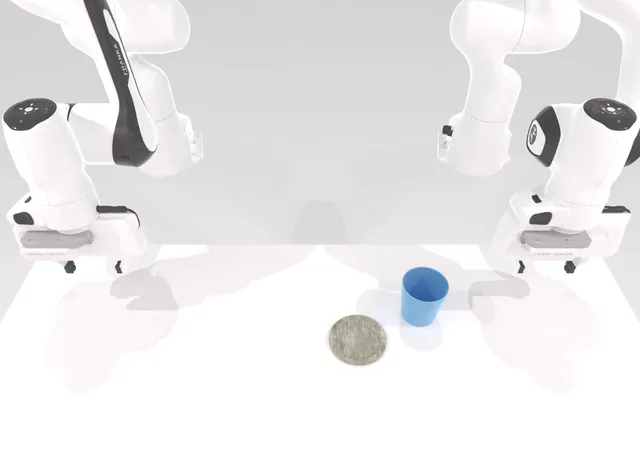
Start
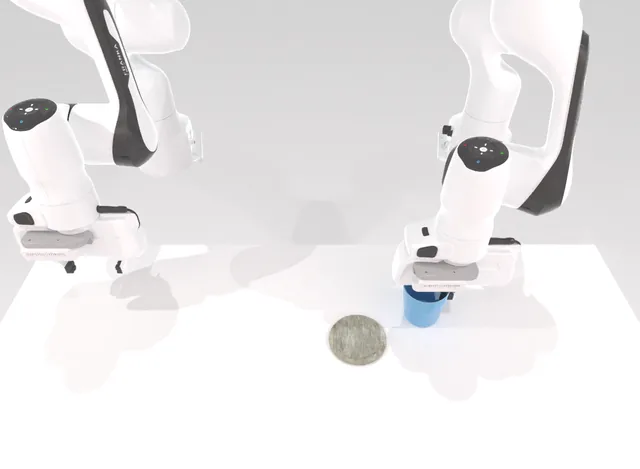
Grasp and carry
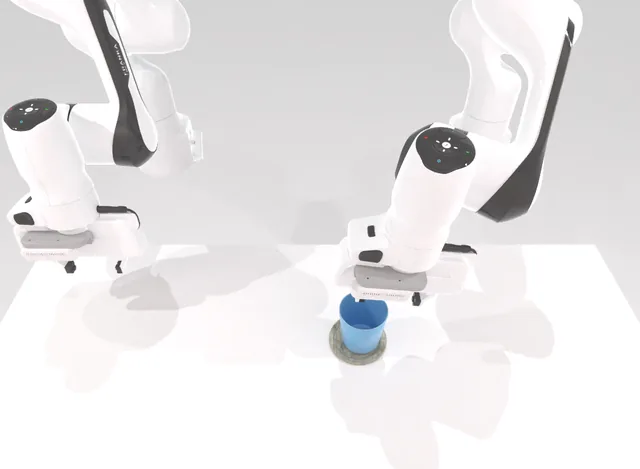
Done
The test · the scene the policy is scored in
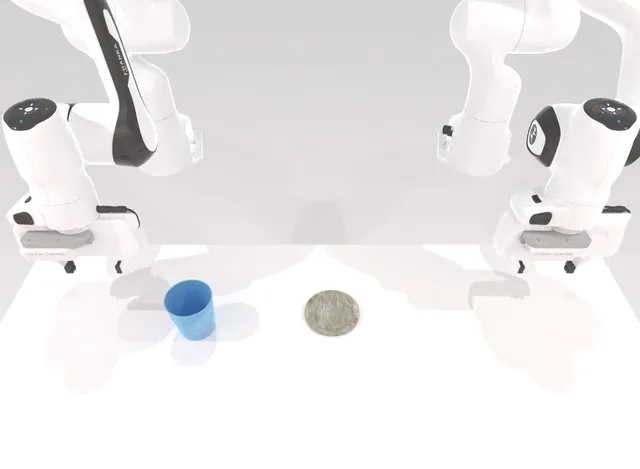
Start: objects moved
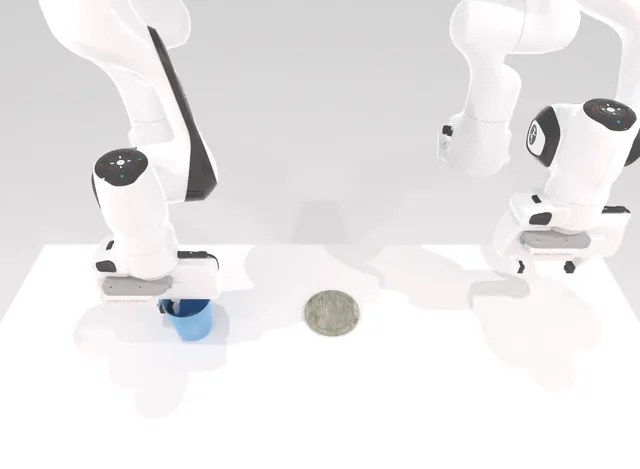
The left arm acts
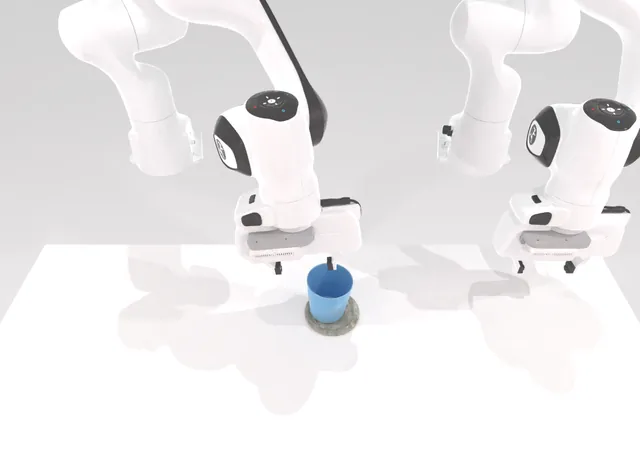
Success
At a glance
| Tasks | 16 manipulation tasks on a two-arm Franka setup, each scored on its own |
| Context | One demonstration: three camera streams, both arms' poses and the actions taken |
| Model | vector_v1.1, the same network for every entry; you train the weights |
| Duel | 160 (10 × 16 tasks), dealt from a chain block finalized after the commitment |
| Crown | The challenger's score beats the king's by at least +3.0 pts |
| Rewards | 30% of miner emissions, shared 40 / 30 / 20 / 10% by the four most recent champions |
| Submission | One per hotkey: a Hugging Face repository holding model.safetensors |
| Record | Every duel published unit by unit, with three clips per unit |
The model in one picture
The demonstration becomes a prompt memory once per unit. At every prediction the network reads the two latest camera frames and arm poses against that memory and denoises a chunk of end-effector actions for both arms. The model takes it apart, input by input.
Where the crown stands
The crown
—average over the tasksCrown vacant
No model holds the crown yet: the first accepted entrant is crowned by genesis.
0 duels published · the dashboard
Compete in four steps
- Train the weights of vector_v1.1 with your own data, curriculum and method. Training an adaptive model lists what is yours to decide.
- Check your
model.safetensorsagainst the pinned architecture withrobotensor miner check. - Submit:
robotensor miner submituploads to a new private repository, commits it on chain with the weights' sha256, then makes the repository public. One submission per hotkey. - Duel: your entry is queued as soon as a validator reads the commitment, oldest first, and plays whoever holds the crown when its turn comes.
Read next
The tasks, one unit from end to end, and how the scenes widen one factor at a time.
The guideDuels and the crownHow a duel runs, the crown rule, the rewards, and the cases that move nothing.
The rulesWhat you submitThe weights, the repository and the commitment.
ReferenceKey numbersEvery number the competition runs on, read from its contract.