
Attune
Attune
The open frontier for adaptive robot intelligence.
Compete to build the next generation of robot models toward real-world physical control.
02The direction
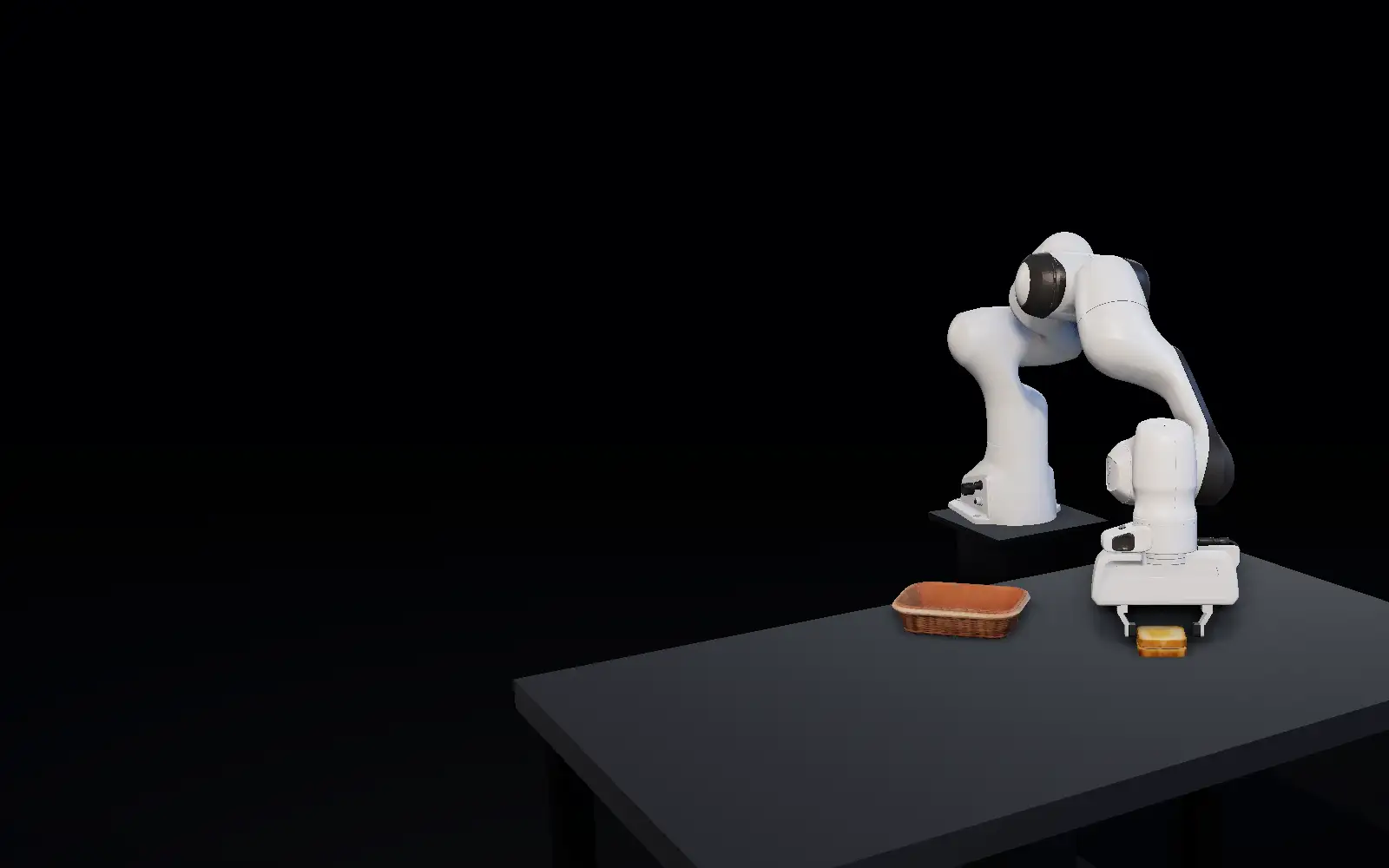
AdaptiveIntelligence.More tasks.More robots.
A robot should not need a new brain every time the work changes.
03Technology
Compete at the edge of Physical AI.
- 01In-Context Robot Learning+ Human-Video Learning
- 02World Action Models+ WAM Inference Optimization
01 / Action-aware in-context learning
Vector
02 / Human-video ICL × World Action Models
Horizon
01 / Action-aware in-context learning
Vector
Learn the behavior. Adapt the execution.
Vector pushes adaptive manipulation from explicit robot demonstrations toward greater precision, robustness, and transfer.
Input
- Demonstration video
- Robot action trajectory
- Current robot observation
VECTOR
- Robot actions
What we measure
- Adaptation
Execute demonstrated behavior under changed conditions.
- Precision
Solve physical tasks where small errors matter.
- Robustness
Handle changes in position, environment, objects, and clutter.
- Cross-Embodiment
Move toward reusable intelligence across robot systems.
Our direction
- Spatial Variation
- Environment Variation
- Object Variation
- Clutter
- Cross-Robot
02 / Human-video ICL × World Action Models
Horizon
Watch the task. Model the future. Act.
Horizon brings several of Physical AI's newest directions into one competition: human-video task prompting, in-context adaptation, World Action Models, and efficient inference.
Input
- Human / robot demonstration video
- Robot history
HORIZON
- Future physical state
- Robot actions
What we measure
- All in Vector
Adaptation · Precision · Robustness · Cross-Embodiment
- Human-Video Learning
Teach unfamiliar physical work through natural visual demonstrations.
- Real-Time WAM
Preserve frontier capability while pushing inference toward practical closed-loop control.
Our direction
Join our open competition
Attune is built around measurable & auditable competition.
- 01Same Conditions
Compared models face the same task, demonstration, starting state, seed, and evaluation rules.
- 02Randomized Evaluation
Objects, environments, appearance, and clutter change so models must generalize rather than memorize.
- 03Reproducible Results
Important frontier results should be independently verifiable.